Gravel driveways
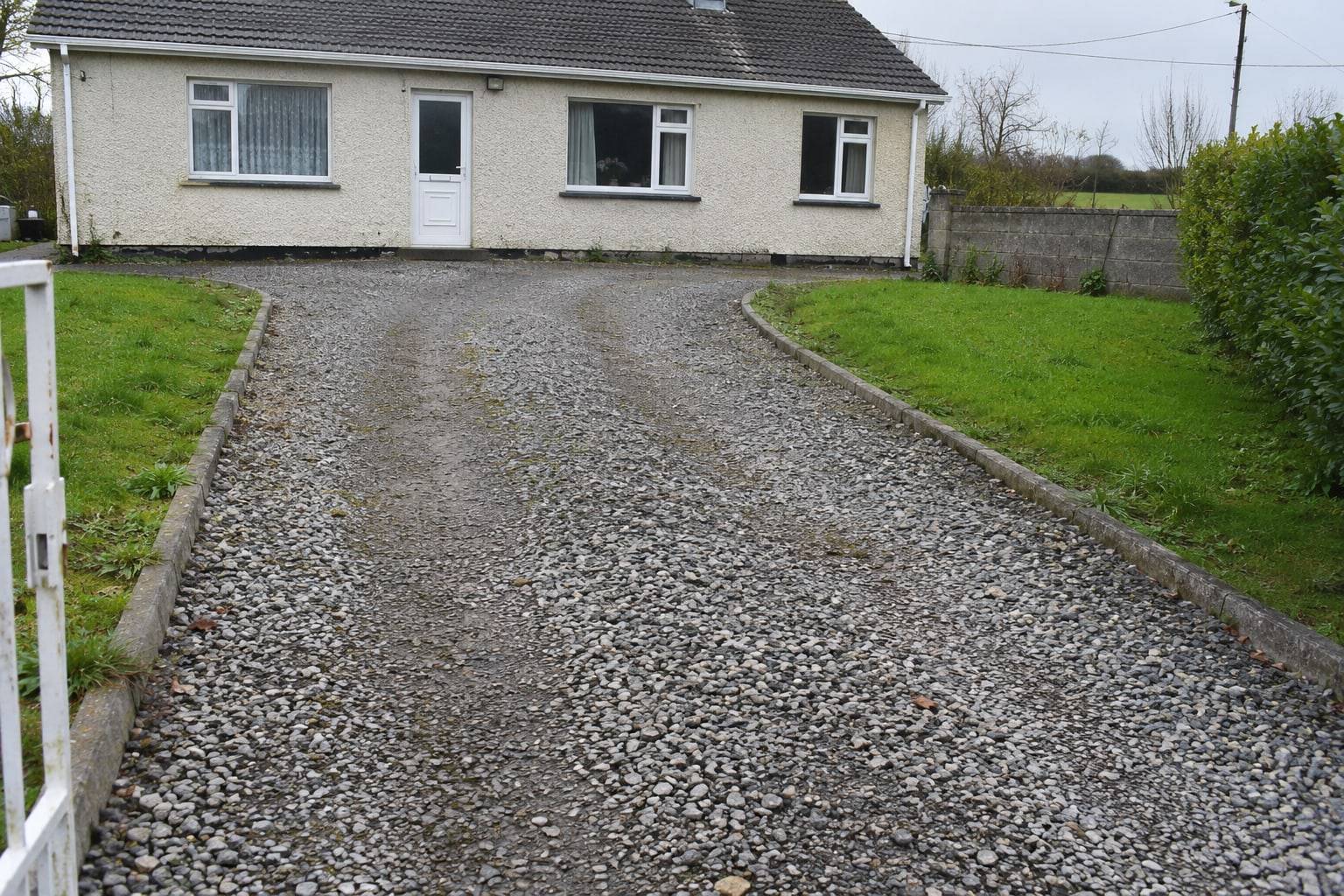
A gravel driveway is loose stone laid over a compacted sub-base, with edging to hold it in. Sources give different figures for the stone size and depth.
Checked against the sources on
In short
- Irish merchants sell driveway gravel in 10 mm, 14 mm and 20 mm sizes.
- DIY.ie's guide digs 200 mm: 150 mm of sub-base and 50 mm of gravel on top.
- Edge the drive so the gravel cannot spread onto the ground around it.
- Angular chippings move less than rounded pebbles, especially on a slope.
- Loose gravel is hard going for wheelchair users, so plan a firm route to the door if anyone needs one.
Which stone to use
Irish builders' merchants sell decorative gravel in bulk bags. Howbert and Mays, for example, lists Ballylusk gravel in 10 mm and 14 mm and other gravels in 20 mm. It sells a larger Wexford beach pebble, 20 to 30 mm, for paths, walkways and parking areas.
Roadstone recommends limestone and granite chippings because they are durable and compact well. Its decorative stone page lists a 14 mm Driveway Pebble but gives no general rule on size.
Paving Expert, a British technical site, says "Any size gravel or other surface dressing can be used for a driveway, although 10mm is the most popular choice." It says rounded gravels usually come from the sea or rivers and angular ones from quarry blasting, and that angular gravels interlock more, so they are more stable underfoot. Roadstone makes the same point about angular chippings, saying they "lock together and resist movement".
How deep it goes
DIY.ie, the Irish B&Q site, says to dig 200 mm for a gravel driveway, which allows 150 mm of sub-base and 50 mm of gravel. It recommends MOT Type 1 for the sub-base, which is the British name. Irish quarries sell a similar material as Clause 804; see sub-base: Clause 804 and T1 Struc.
Paving Expert gives a thinner layer of stone. It recommends a depth of at least twice the size of the gravel, and says "In the vast majority of projects, 25-40mm depth is just about ideal." For the sub-base it describes a 130 mm layer of Type 1, compacted with a vibrating plate or roller.
For quantities, Roadstone says "1 tonne covers approx. 10m² at a depth of 50mm". The gravel calculator and the sub-base calculator work out both layers for your area.
Edging
DIY.ie says edging keeps the gravel in place and stops it spreading onto the ground around it. Paving Expert puts it more strongly: "Rule number one is that gravel without some form of edge restraint WILL migrate."
Weeds and upkeep
A permeable weed membrane goes between the sub-base and the gravel. DIY.ie says it stops weeds coming up from below while letting water drain through. Roadstone says that laying gravel over a membrane or its own stabilising sheets "significantly reduces weed growth."
It does not stop weeds altogether. DIY.ie warns that weeds may still grow with the fabric in place, and suggests pulling them by hand or using weed killer. It also says regular raking keeps the gravel level, and suggests topping up with fresh gravel when the level drops. Homebuilding & Renovating, a British magazine, describes gravel as relatively easy to maintain, with occasional topping up and raking.
Slopes and gravel grids
Gravel moves downhill. Nidagravel, a British maker of plastic gravel grids, says that on a slope the gravel moves towards the bottom after a while. It adds: "A larger 20mm rounded river or pea gravel is likely to migrate much further than a smaller 10mm angular gravel or chipping."
Grids are honeycomb panels laid under the gravel to hold it in cells. Nidagravel says some of its grids can be laid on gradients up to 15%, held down by the weight of the gravel, and gives thicknesses of 30 mm and 40 mm for two of its grids. These are the maker's own claims. Roadstone sells gravel stabilising sheets for the same purpose.
Walking and wheelchairs
The Sensory Trust, a British charity, advises avoiding loose materials such as gravel and soft bark on paths. It says "These are challenging for people with limited mobility, and often impossible for wheelchair users." Nidagravel says its stabilised surface is suitable for wheelchair users.
Rainwater
Homebuilding & Renovating describes gravel as the most permeable of the common driveway surfaces. In Ireland a front garden surface of 25 square metres or more, or over half the garden, has to be permeable or let rain soak into the ground to stay exempt from planning permission. See the permeable paving rule.
Sources
- Howbert and Mays: Ballylusk gravel 14mm product page
- Howbert and Mays: Wexford beach pebble 20-30mm product page
- Roadstone: decorative stone product page
- DIY.ie: how to lay a gravel driveway
- Paving Expert: gravel driveways, some definitions (British)
- Nidagravel: gravel stabilisation grids on a slope (British manufacturer)
- Nidagravel: gravel stabilisation grids for driveways (British manufacturer)
- Sensory Trust: paths and routes (British)
- Homebuilding & Renovating: garages and driveways material guide (British)
This page is general information taken from published guidance. Products differ, so follow the laying and care instructions for the one you buy.
Related guides
- Which driveway surfaceSix driveway surfaces compared on rainwater, repairs, upkeep and cars.
- Resin bound drivewaysResin bound and resin bonded, the base it needs and the common failures.
- Sub-base: Clause 804 and T1 StrucWhat the two materials are, which one goes under a building and which under paving.
- Drainage for driveways and patiosFalls, channel drains and soakaways, and where the rainwater is allowed to go.