Tarmac driveways
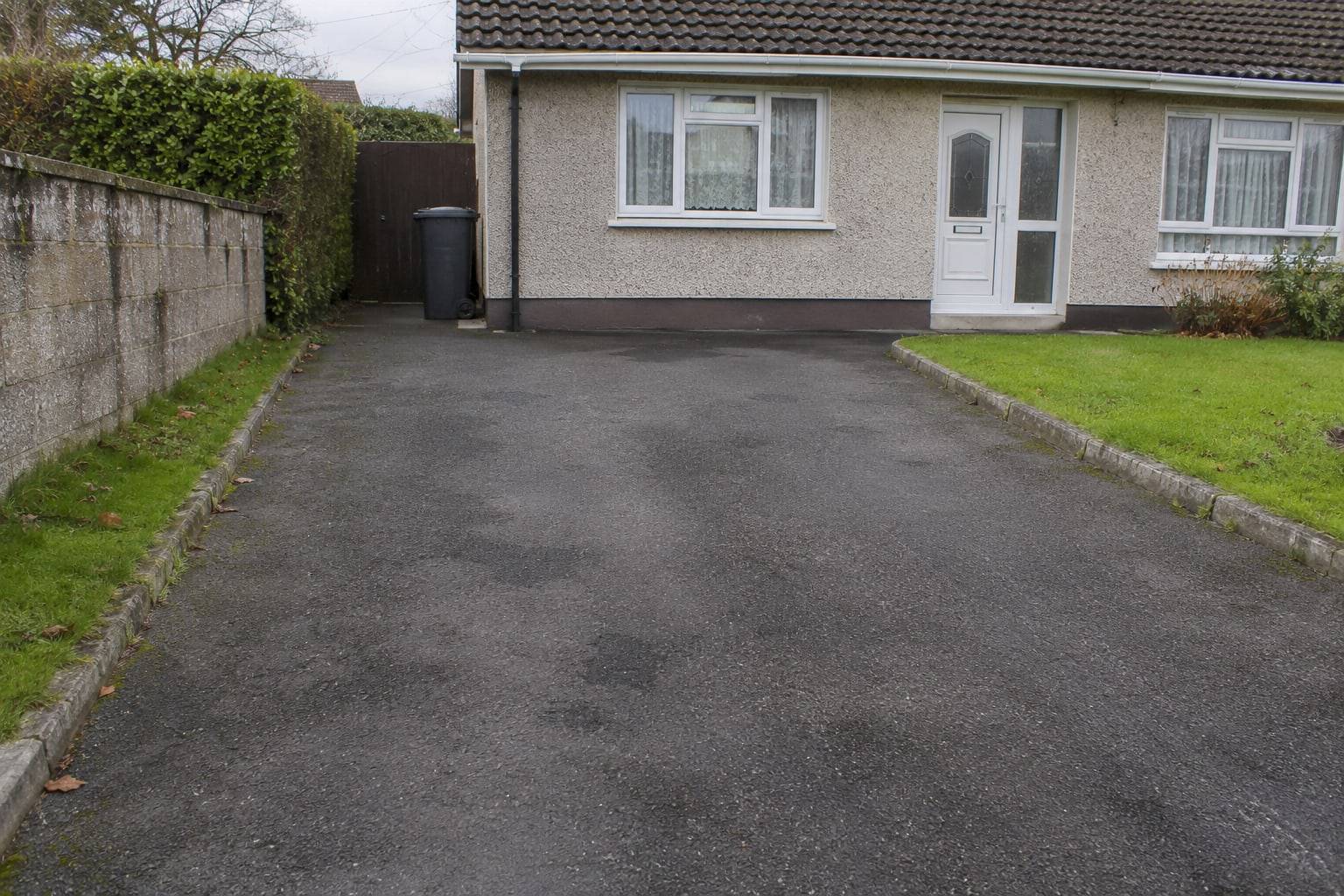
A tarmac driveway is hot asphalt laid in layers over a stone sub-base and rolled. It starts out black and fades to dark grey within a year or so.
Checked against the sources on
In short
- Tarmac goes down in layers: a stone sub-base, a binder course and a surface course.
- A British reference site gives at least 100 mm of sub-base, 40 to 50 mm of binder and 20 to 25 mm of surface.
- Every free edge needs a kerb or edging, or it will crumble.
- Keep cars off for 24 hours if you can, and avoid turning the wheel while parked during the first hot summer.
- Clean up oil and fuel drips. They soften asphalt.
The layers
Roadstone, an Irish supplier, groups macadams into three layer types: base, binder and surface course. The figures below are from Paving Expert, a British technical site.
| Layer | Paving Expert's figure |
|---|---|
| Sub-base | At least 100 mm |
| Binder course | At least 40 mm, preferably 50 mm |
| Surface course | At least 20 to 25 mm when rolled |
The surface course usually uses 6 mm or 10 mm stone, and for a binder of 50 to 80 mm the site gives 20 mm stone. Its worked example for a driveway is 100 mm of sub-base, 50 mm of binder and 25 mm of surface, so the dig goes 175 mm below the finished level. The tarmac calculator gives tonnes for an area and thickness, and the sub-base calculator does the stone underneath.
Paving Expert says every free edge of bitmac should be held by an edging or kerb. Without one, it says, the edges tend to crumble and fail, and weeds follow.
Laying and the first few days
Driveway tarmac is laid hot. Holcim UK says hot mix is made at between 140 and 190 degrees C. Cold mix is made without heat, and Holcim says it is mostly used for repairs, potholes and patching.
Paving Expert says the binder course is rolled as soon as it is laid, and that vibrating rollers are rarely used on hot material. You can walk on it once it is rolled. It suggests at least an hour for the surface to cool before a car goes on it, and says most contractors prefer to keep vehicles off for 24 hours.
New tarmac marks easily in its first warm months. An aftercare leaflet from Aggregate Industries, a British supplier, says the risk of damage to the surface rises sharply in summer, when temperatures are highest. It warns:
"The risk of damage from tyres is greatest when using power steering in combination with either attempting to steer a stationary vehicle, or manoeuvring in a restricted area at very slow speed."
The leaflet adds that dents can generally only be removed by patching the surface.
How it ages
The leaflet says: "Within 6 months to a year the colour will lighten to a dark grey as the binder at the surface is exposed to the sunlight, oxidises and wears."
It says most asphalts soften when oil or oil products get on them, and lists petrol, diesel, lubricating oil, paraffin, creosote, oil based paints, turpentine and some solvents. It warns: "Accumulated oil droppings from a car can create soft spots in the asphalt, which if not treated, will result in the asphalt structure breaking down."
Weeds can grow at the edges, especially beside lawns and flower beds, either in dirt on the surface or up from below. The leaflet also says house drives are usually designed for the weight of cars, and may suffer structural as well as surface damage if heavy vehicles use them.
What Irish suppliers list for driveways
Roadstone lists three asphalt products for driveways.
- Asphalt concrete, which it says is used on roads, driveways, car parks and paths. It is made to IS EN 13108-1 and NSAI SR 28.
- Stone mastic asphalt, made from stone, bitumen and cellulose fibres. Roadstone lists it for private roads, driveways, yards and house fronts, and says it resists deformation.
- A coloured asphalt made with a clear binder and pigments, which it lists for domestic use and house fronts.
Roadstone's product pages do not give layer thicknesses. Holcim UK sells a separate permeable asphalt that lets water through to a drainage layer below, which matters for front gardens covered by the permeable paving rule.
Tarmac, bitmac and asphalt
Tarmac is what most people call it. Paving Expert says tarmacadam is a popular but technically wrong name, and that the material on a driveway is bituminous macadam (bitmac) or asphalt. The Aggregate Industries leaflet uses asphalt as the general term for all coated materials, including macadam and stone mastic asphalt. Holcim UK says tar is no longer used to make asphalt because it is considered hazardous.
Sources
- Paving Expert: tarmacadam, bitmac and asphalt (British)
- Paving Expert: laying bitmac and asphalt (British)
- Paving Expert: tarmac driveway construction (British)
- Roadstone: Asphalt concrete product page
- Roadstone: Stone mastic asphalt product page
- Roadstone: Ultracolour Colour Asphalt & Surface Treatments
- Aggregate Industries (Holcim UK): Asphalt Care, new asphalt surfaces, domestic and light use, January 2023 (British)
- Holcim UK: An essential guide to asphalt (British)
- Holcim UK: Asphalt for domestic projects (British)
This page is general information taken from published guidance. Products differ, so follow the laying and care instructions for the one you buy.
Related guides
- Tarmac or block pavingHow the two driveway surfaces differ on repair, drainage and upkeep.
- Sub-base: Clause 804 and T1 StrucWhat the two materials are, which one goes under a building and which under paving.
- Drainage for driveways and patiosFalls, channel drains and soakaways, and where the rainwater is allowed to go.
- Which driveway surfaceSix driveway surfaces compared on rainwater, repairs, upkeep and cars.